How to Stop Revenge Trading
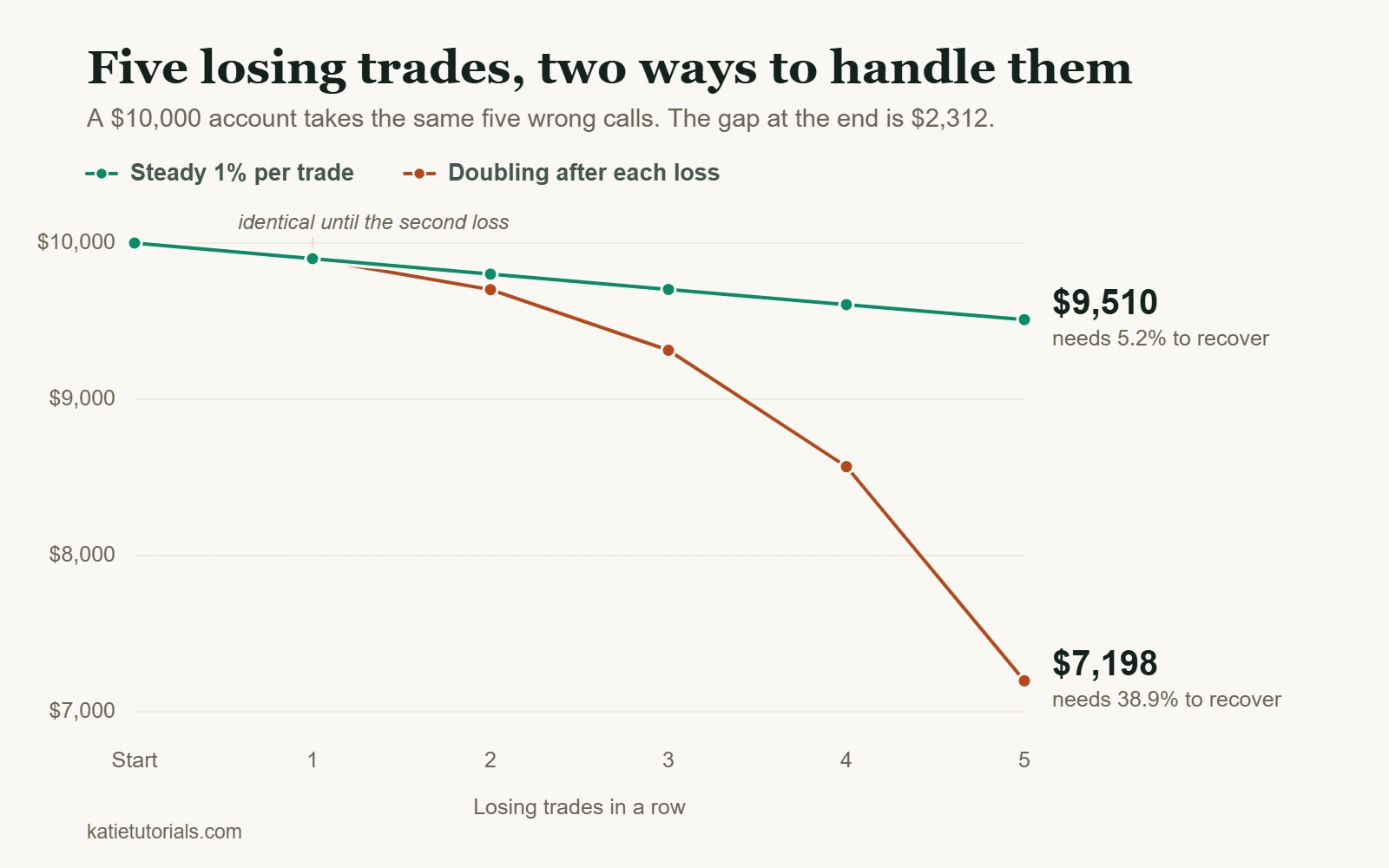
Revenge trading cost me 8,000 dollars in fifteen minutes. Here is the arithmetic of what it does to an account, and the six mechanical rules that stop it.
How much to risk per trade, where the stop goes, and why account size decides everything else.
Risk management decides whether you are still trading a year from now. It is not about avoiding losses. Losses are part of the job. It is about making sure no single trade, and no bad week, can do damage you cannot recover from.
This path is four lessons, in order: how to size a trade, how to leave it, how to tell whether your strategy actually has an edge, and how to stop the one habit that destroys more accounts than any bad strategy. Each takes ten to fifteen minutes.
Decide how much of the account you are willing to lose on one trade, decide where the trade is proven wrong, and divide the first by the distance to the second. With a 2,000 dollar account and 1% risk, you can lose 20 dollars. If your stop is 0.50 away from the entry, that is 40 shares. The size comes out of the arithmetic, not out of how confident you feel.
A stop belongs at the price where your reason for the trade stops being true: beyond the level that should have held, or beyond the swing that defines the move. If that point is too far away for your risk per trade, the answer is a smaller position or no trade, never a tighter stop that ordinary noise will hit.
Losses and recoveries are not symmetrical. After a 10% loss you need about 11% to get back to where you were. After a 50% loss you need 100%. Ten losses in a row at 1% risk leave the account down less than 10%. The same ten losses at 5% risk take away about 40%. Losing streaks happen to every strategy, so the question is not whether one will come, but how much of the account it can take.
Work out your own numbers as you read: your account size, your risk per trade in money, and the stop distance you usually use. Keep them on a card next to the screen. Then read the psychology path, because most rules fail not in the calculation but in the moment you decide to ignore them.
Next path: Trading psychology →
Revenge trading cost me 8,000 dollars in fifteen minutes. Here is the arithmetic of what it does to an account, and the six mechanical rules that stop it.
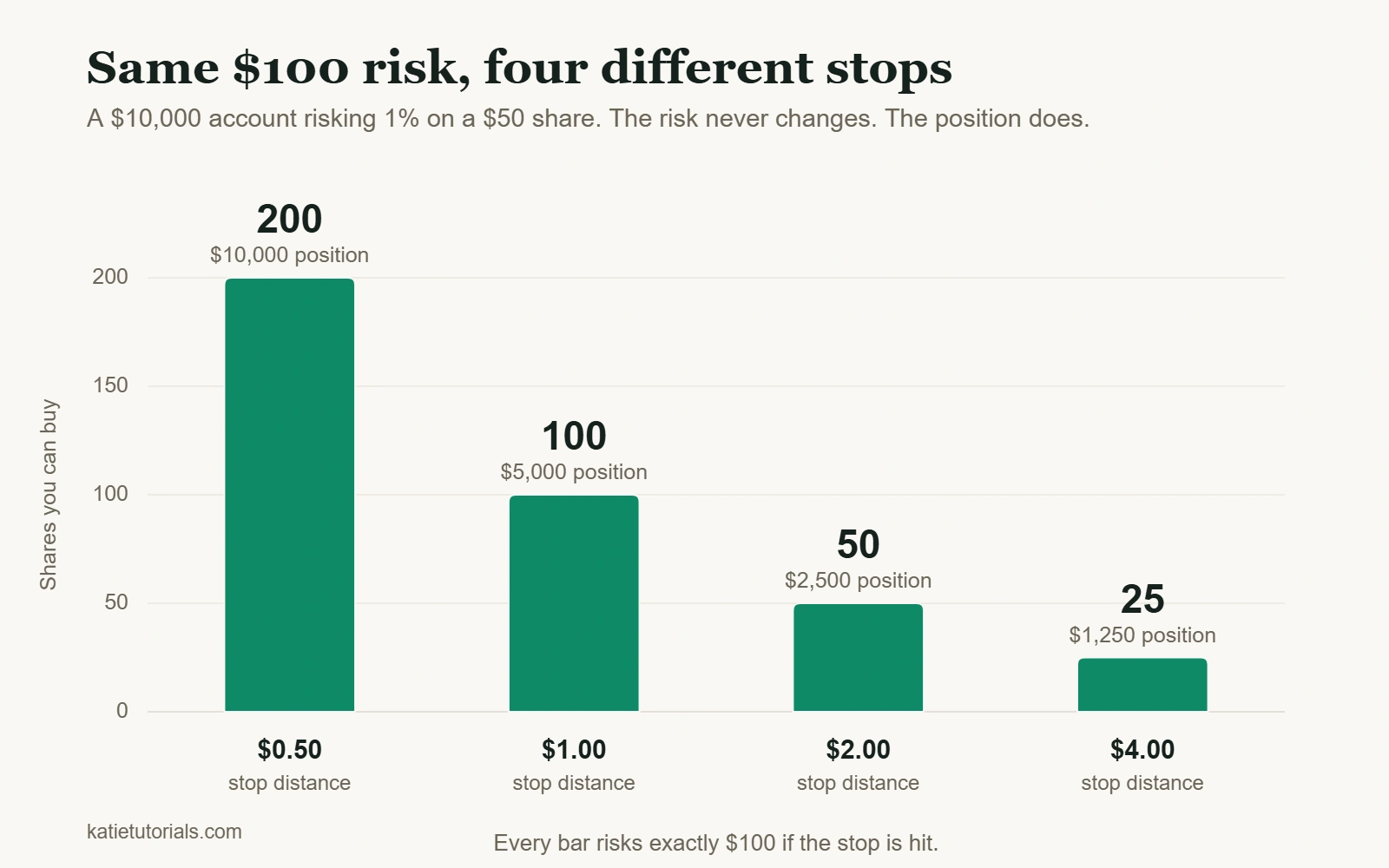
Risk management is two decisions and one division. How much to risk per trade, where the stop belongs, and the arithmetic that turns both into a position size.
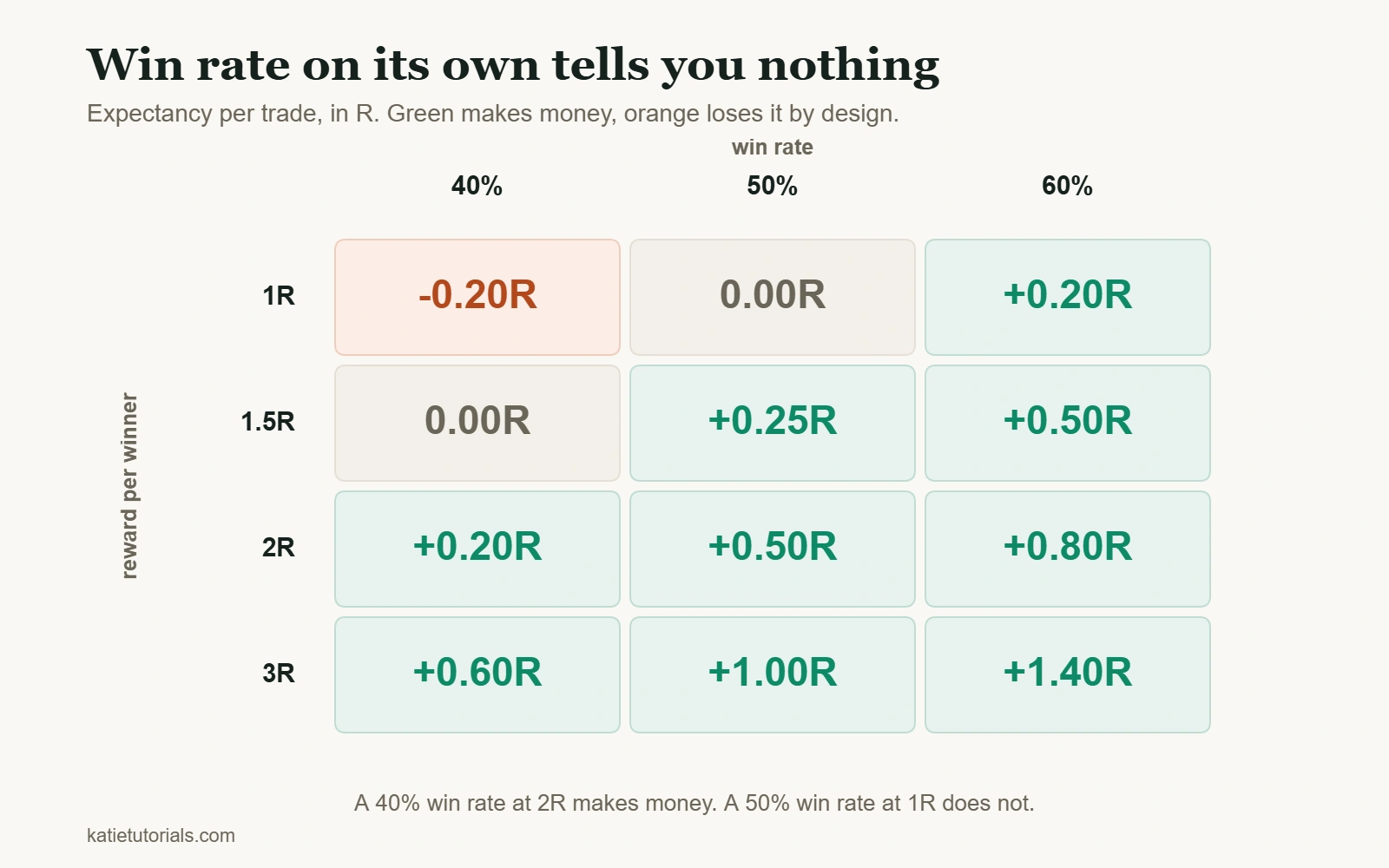
Five numbers decide it, and your account balance is not one of them. How to compute expectancy, how many trades you need, and how to tell a broken strategy from a normal drawdown.
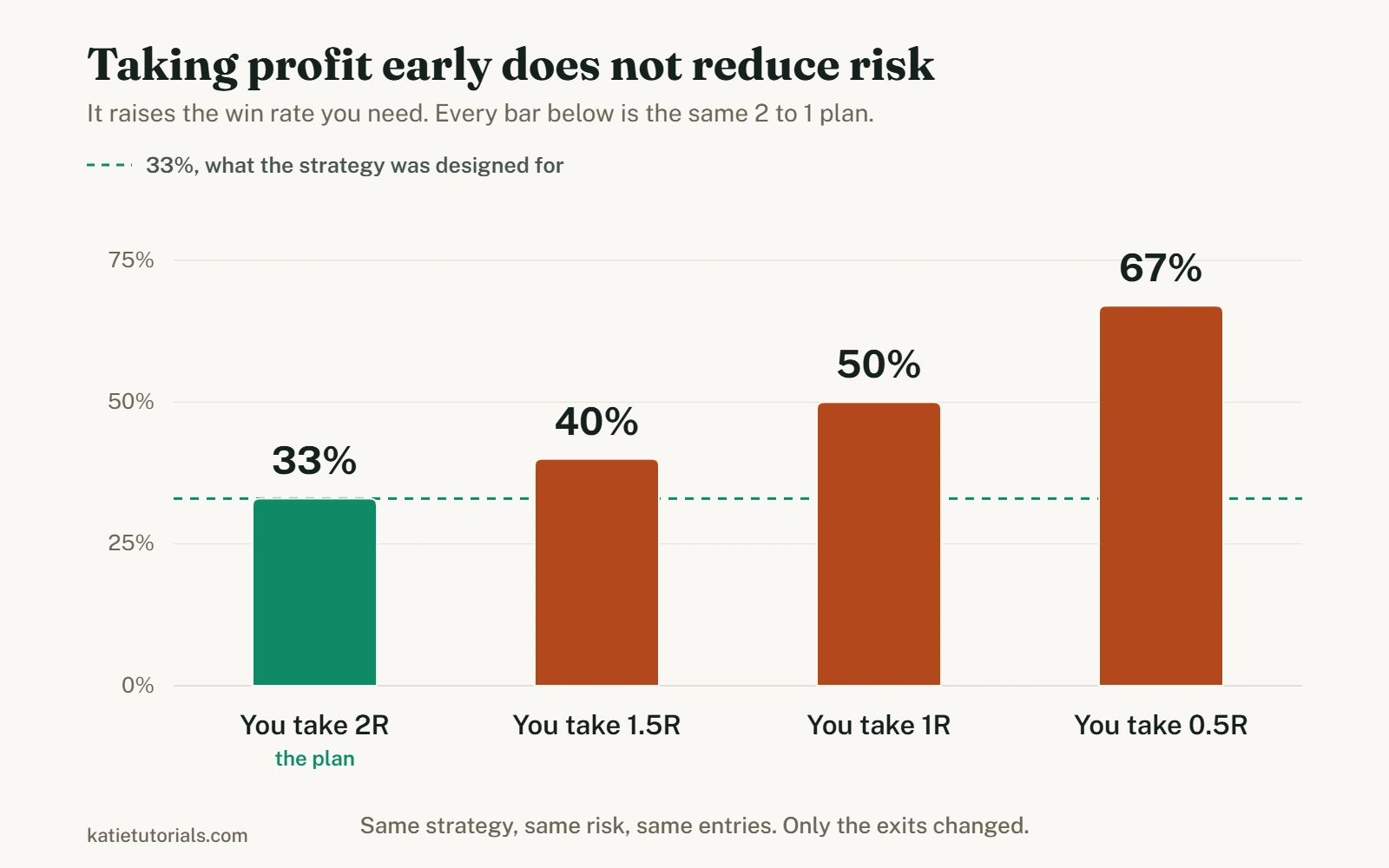
Three exits, all written before you enter. Why cutting winners early raises the win rate you need, and how to tell from your own records whether exits are the problem.