What Economic Factors Affect Stock Prices?
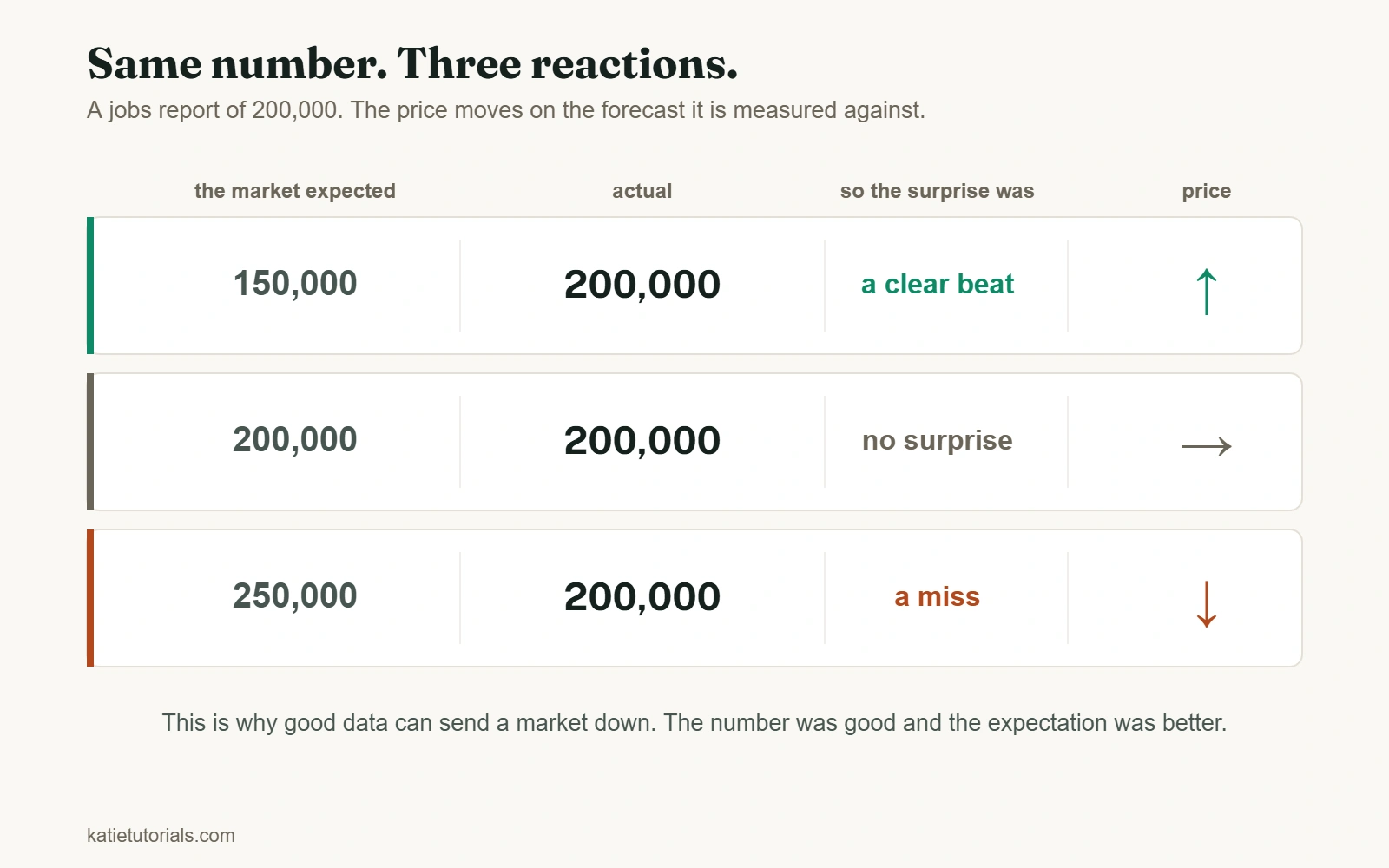
The list is short. The useful part is that markets move on the surprise against the forecast, not on the number, which is why the calendar is a risk tool and not a signal.
Orders, spreads, leverage and position size. The vocabulary you need before the charts make sense.
Before charts, indicators or strategies, there are a few plain facts about how trading works: what an order actually does, what you pay every time you trade, how leverage changes the size of your mistakes, and how much of your account a single trade should touch. Get these wrong and no strategy saves the account. Get them right and most beginner disasters simply cannot happen.
This path is three lessons. Read them in order: first whether your account is big enough to start, then when to trade, then what moves prices. Each takes ten to fifteen minutes.
With 1:30 leverage, 1,000 dollars controls a 30,000 dollar position. A 1% move against that position is 300 dollars, almost a third of the account. The leverage did not make the trade worse. It made the same move thirty times more expensive. That is why position size, not the leverage your broker offers, should decide how much you trade.
A small account and frequent trading are a bad combination. If every round trip costs you the spread plus commission and you risk only a few dollars per trade, costs can take a large share of every win before the market has done anything. The first lesson shows how to check this with your own numbers before you deposit anything.
Markets are not equally active all day. Spreads widen when few people are trading, and moves get larger when major sessions overlap or scheduled news is released. You do not need to predict the news. You need to know when it is due, so that you are not surprised by a move you could have seen on the calendar.
Read one lesson at a time and check it against your own situation: your account size, your broker’s costs, the hours you can actually sit at the screen. If you are new, practise on a demo account while you work through this path, and move to real money only when you can explain why every trade was taken.
Next path: Risk management →
The list is short. The useful part is that markets move on the surprise against the forecast, not on the number, which is why the calendar is a risk tool and not a signal.
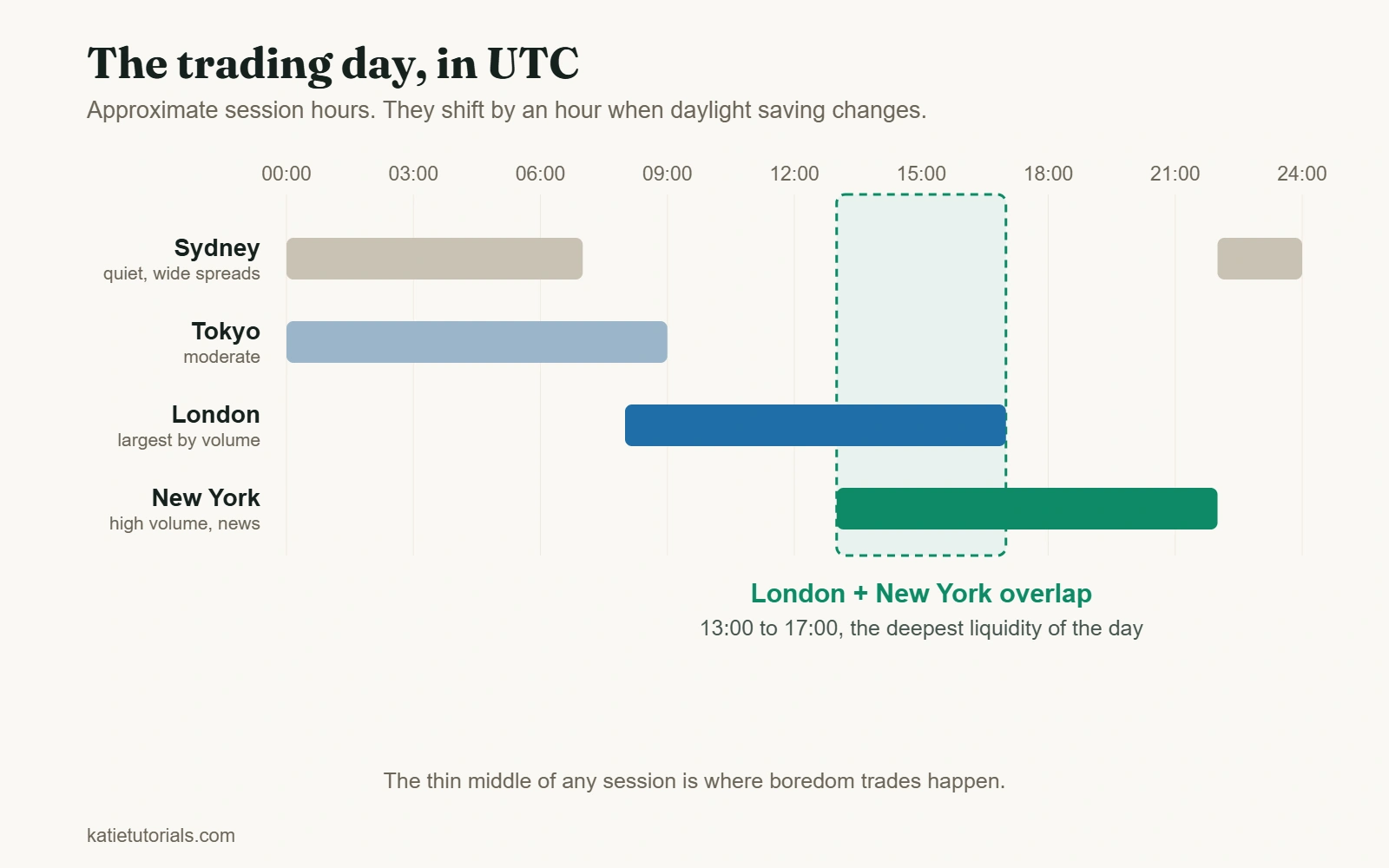
The sessions, the overlaps and the hours to avoid, plus the part nobody covers: how to find the hours you personally trade well from your own record.
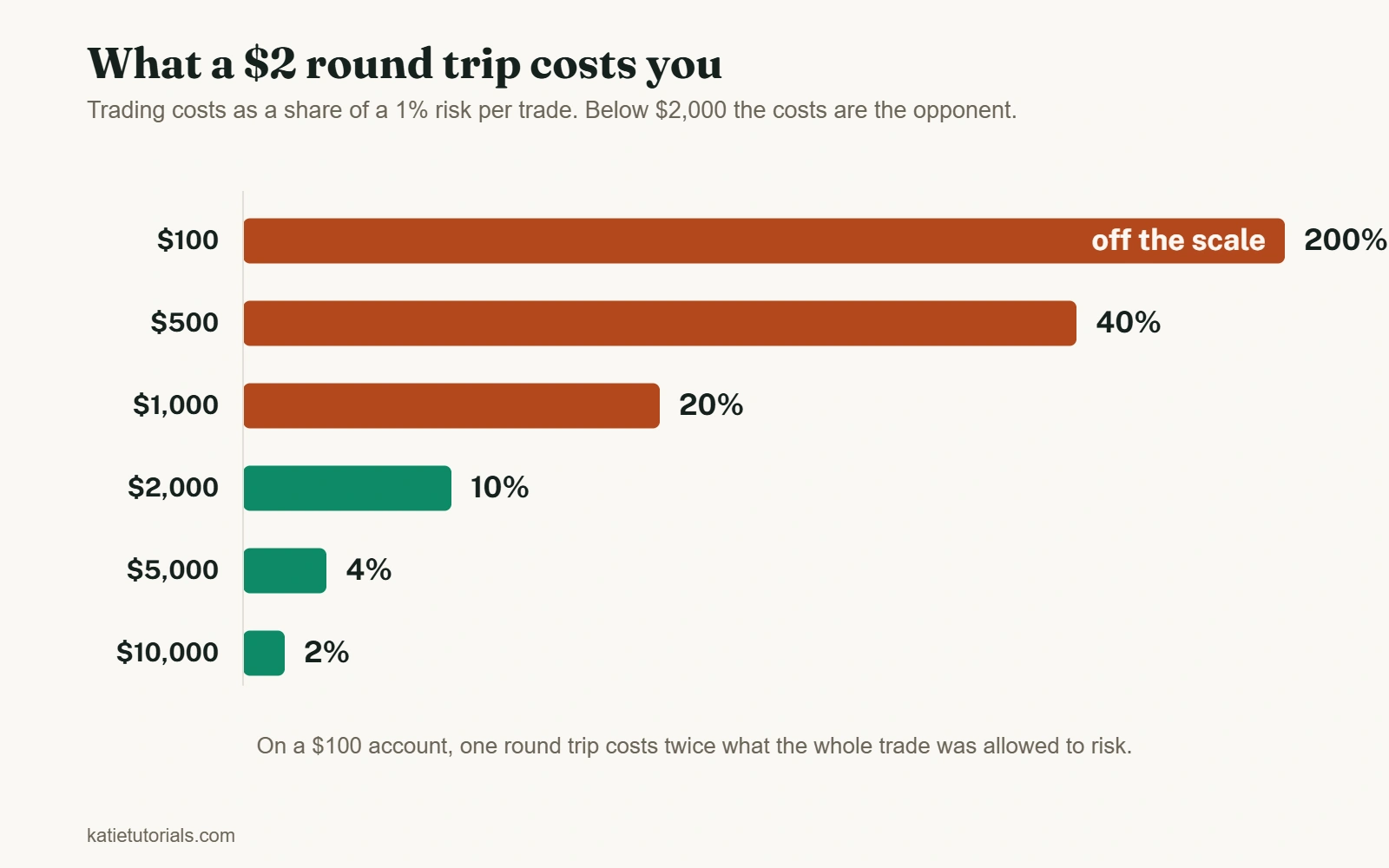
Not the broker minimum. The floor is set by what a round trip costs next to your risk per trade, and the US $25,000 day trading rule was removed in April 2026.