How to Stop Revenge Trading
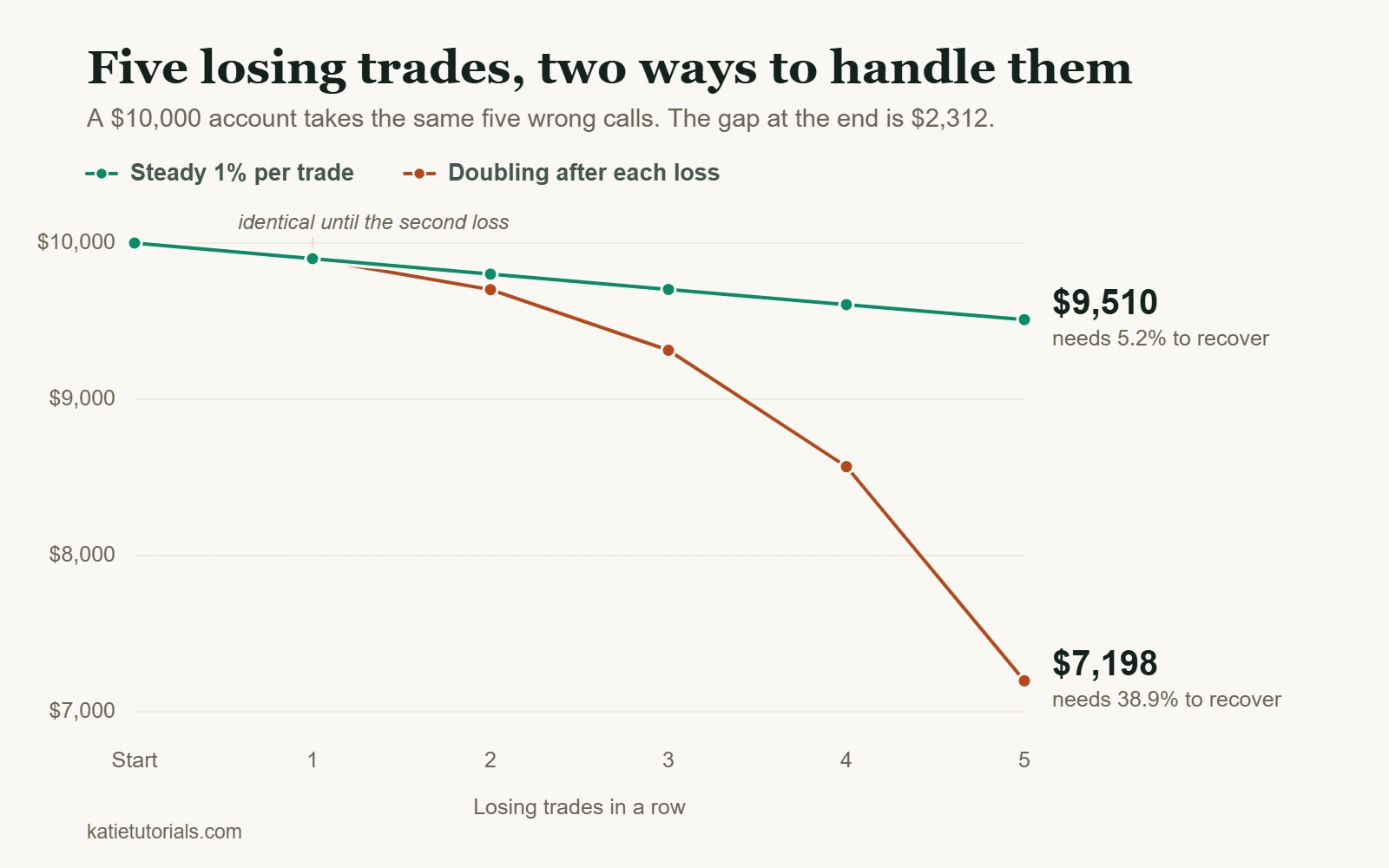
Revenge trading cost me 8,000 dollars in fifteen minutes. Here is the arithmetic of what it does to an account, and the six mechanical rules that stop it.
Fear, greed, revenge trades and discipline, plus the journal that makes all of it visible.
Most traders who blow an account do not lose it to a bad strategy. They lose it to what they do after a loss, after a win, or after three hours of staring at a chart. Trading psychology is the name for that part of the job: the decisions you make when the numbers say one thing and your stomach says another.
This path is six lessons. They build on each other, so read them in order. Each takes ten to fifteen minutes, and each ends with something you can put into practice on your next trade, not a mindset to aspire to.
It is not about becoming calm. Nobody trades without fear or greed, professionals included. The difference is that a professional has decided in advance what they will do when those feelings arrive, and the decision is written down. Trading psychology is mostly the craft of making those decisions while you are calm, so that you do not have to make them while you are not.
That is why this path talks more about rules, checklists and journals than about feelings. Feelings are the weather. Rules are the roof.
Willpower fails exactly when you need it, because a loss switches off the judgement that willpower depends on. A rule does not need you to be in a good state. A daily loss limit in money, a fixed position size, a maximum number of trades per day and a checklist you run before every entry protect the account on the days you are not at your best, and those are the days that decide the result.
Read one lesson, then trade for a few days with the one change it suggests. Do not try to fix everything at once, or you will not be able to tell which change helped. Start the journal from lesson five early if you can: a list of every trade, its size and one word for how you felt is enough. After twenty or thirty trades the pattern is usually obvious.
If you are trading money you need for rent or bills, or hiding losses from someone close to you, stop and deal with that first. No lesson here fixes it, and it is not a technique problem.
Next path: Strategy & analysis →
Revenge trading cost me 8,000 dollars in fifteen minutes. Here is the arithmetic of what it does to an account, and the six mechanical rules that stop it.
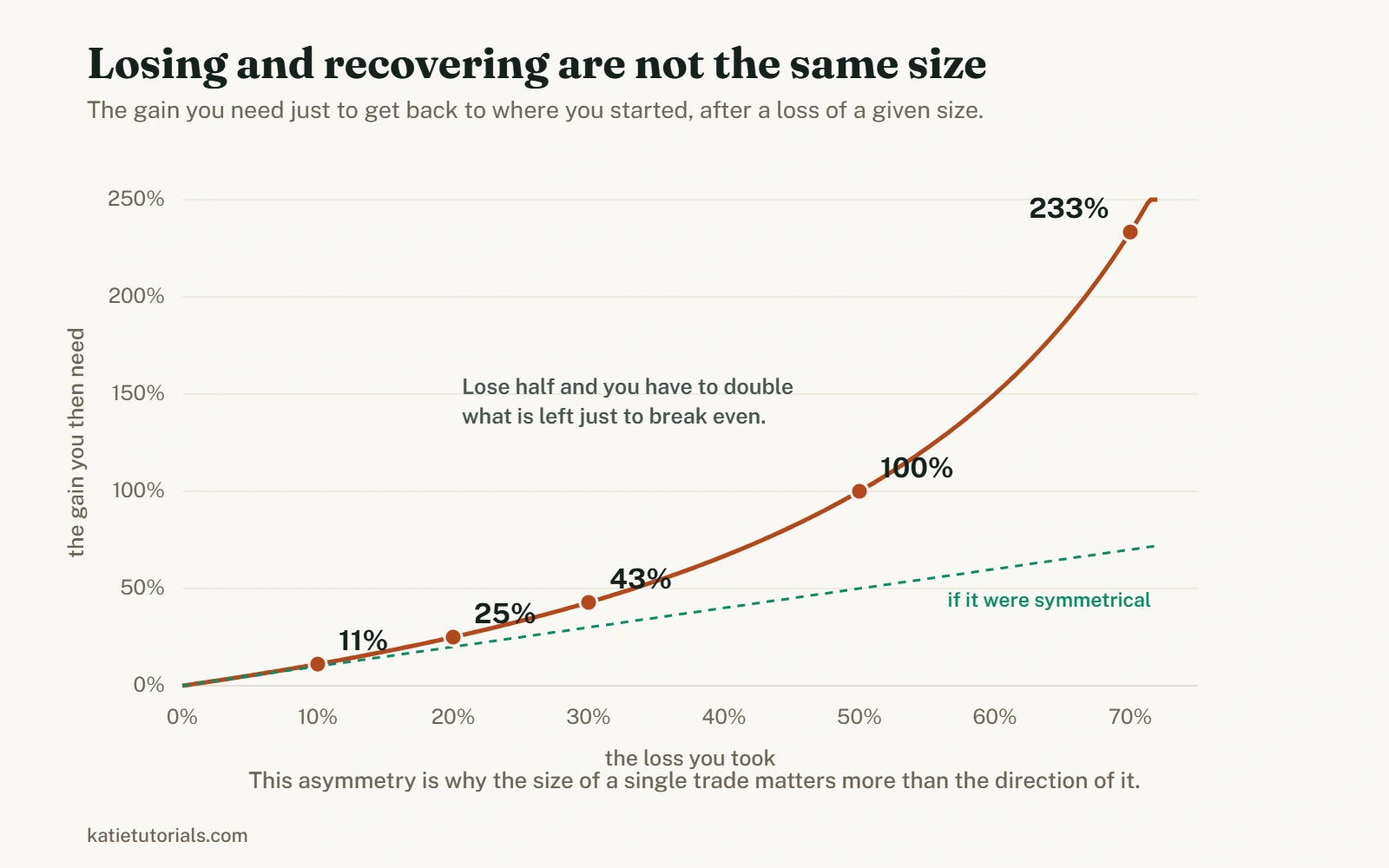
Ten reasons accounts lose money, from position size and revenge trading to the ones decided before you ever place a trade. With the numbers behind each one.
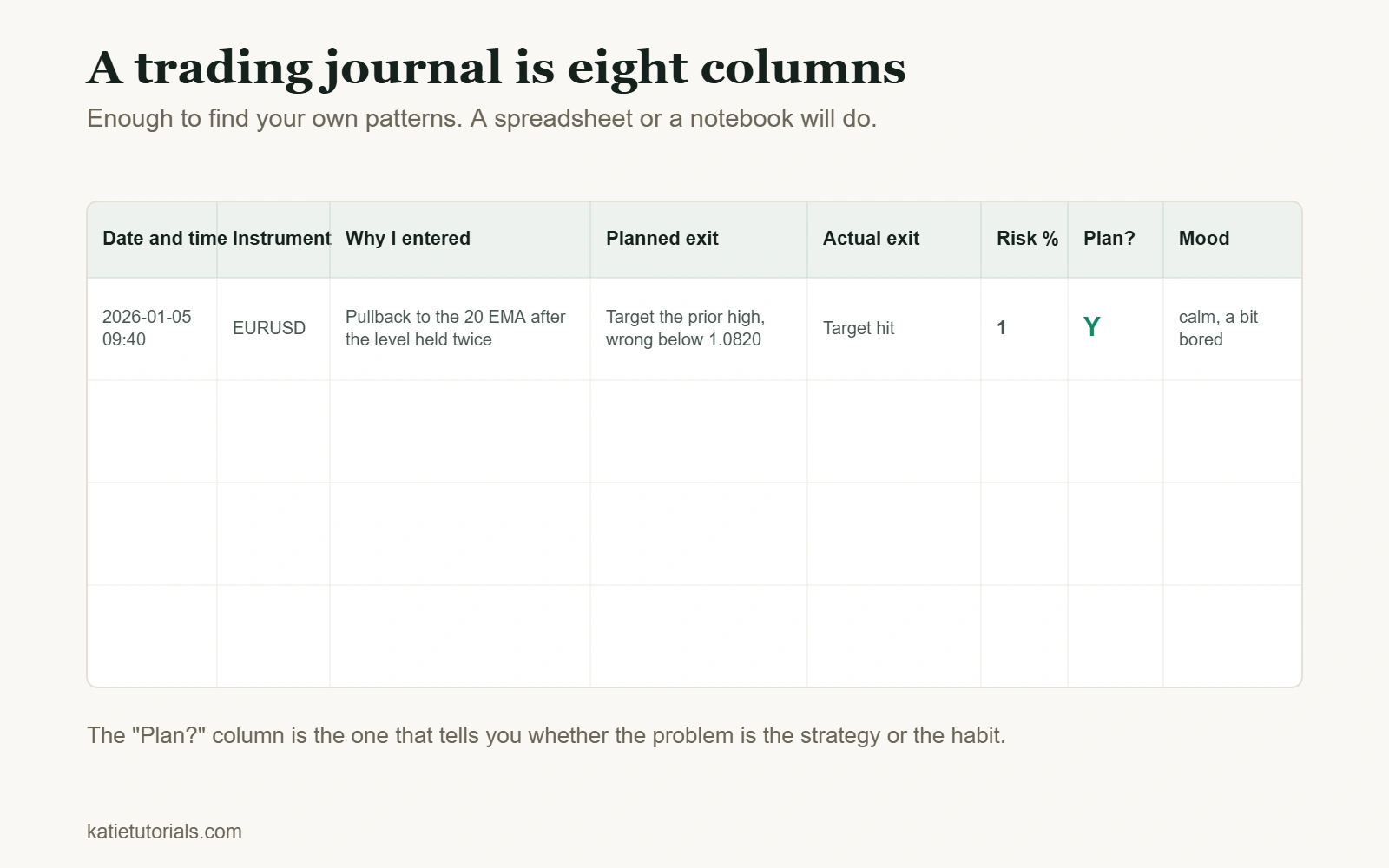
Eight columns, a free template and no software required. What to record, how to review it, and the one column that tells you whether the problem is your strategy or your discipline.
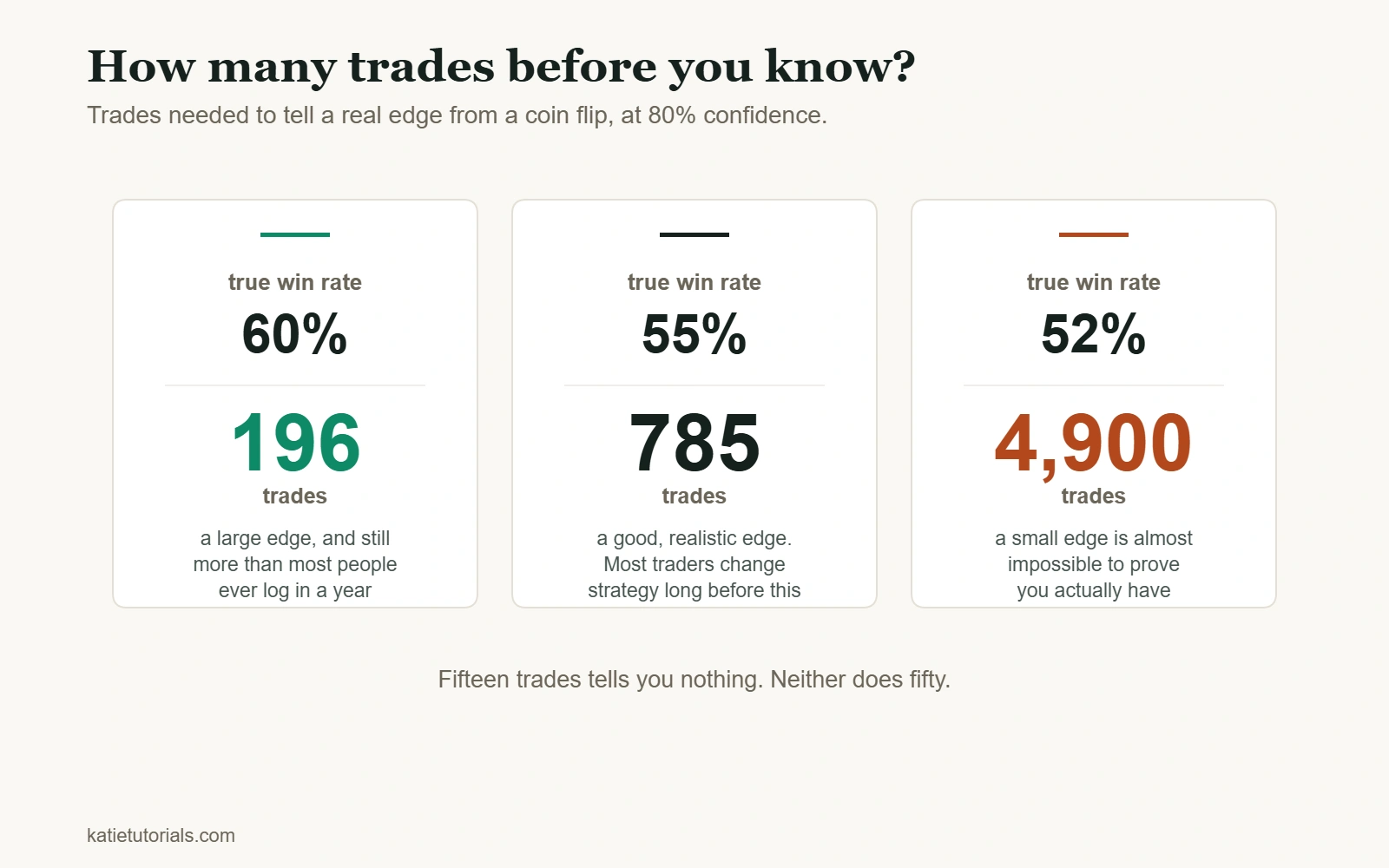
Not because the ideas are complicated. Because the feedback lies, the sample needed to trust it is enormous, and ordinary randomness looks exactly like failure.
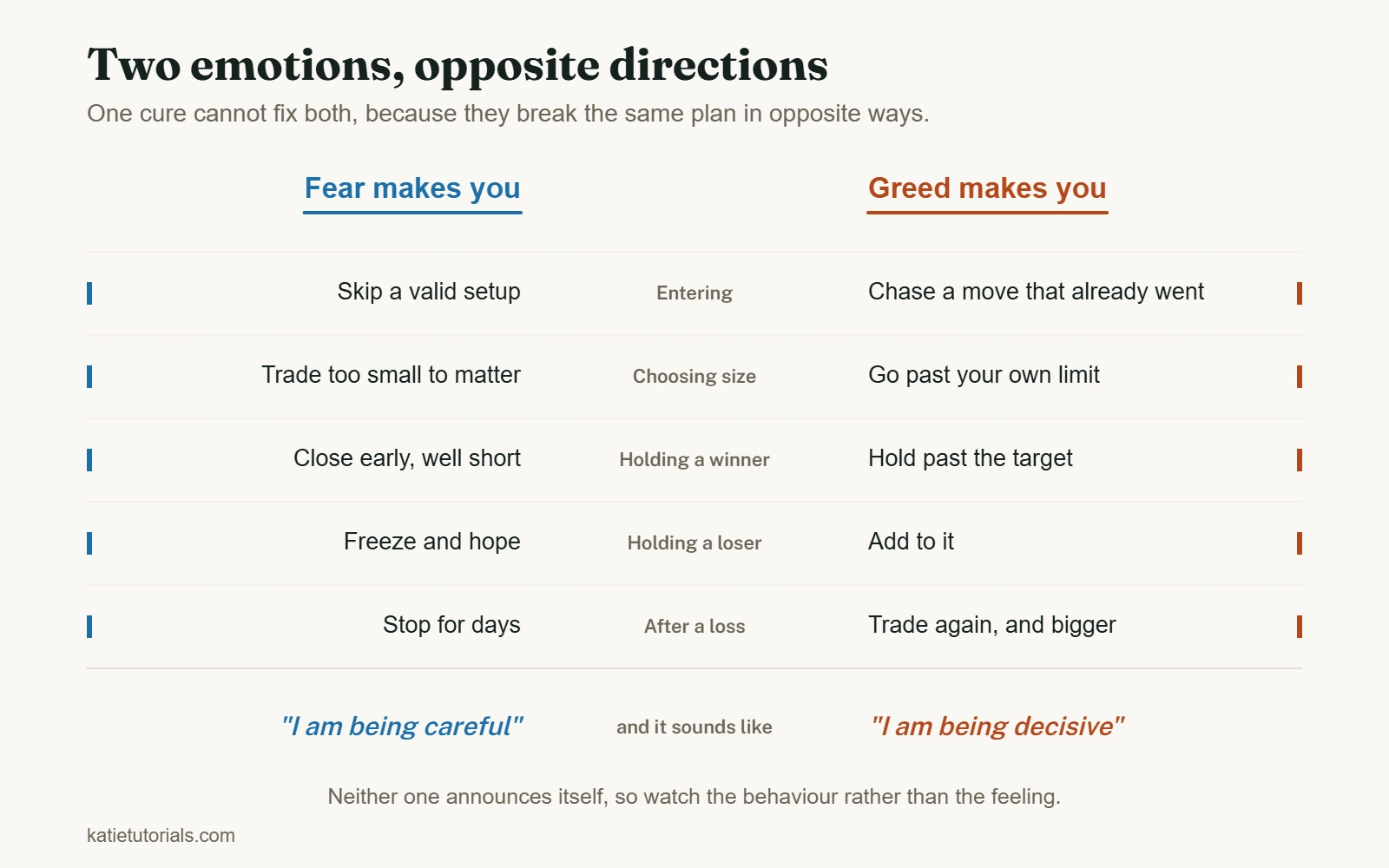
Fear and greed break a trading plan in opposite directions and need opposite fixes. How to tell which one you are in from behaviour rather than feeling.
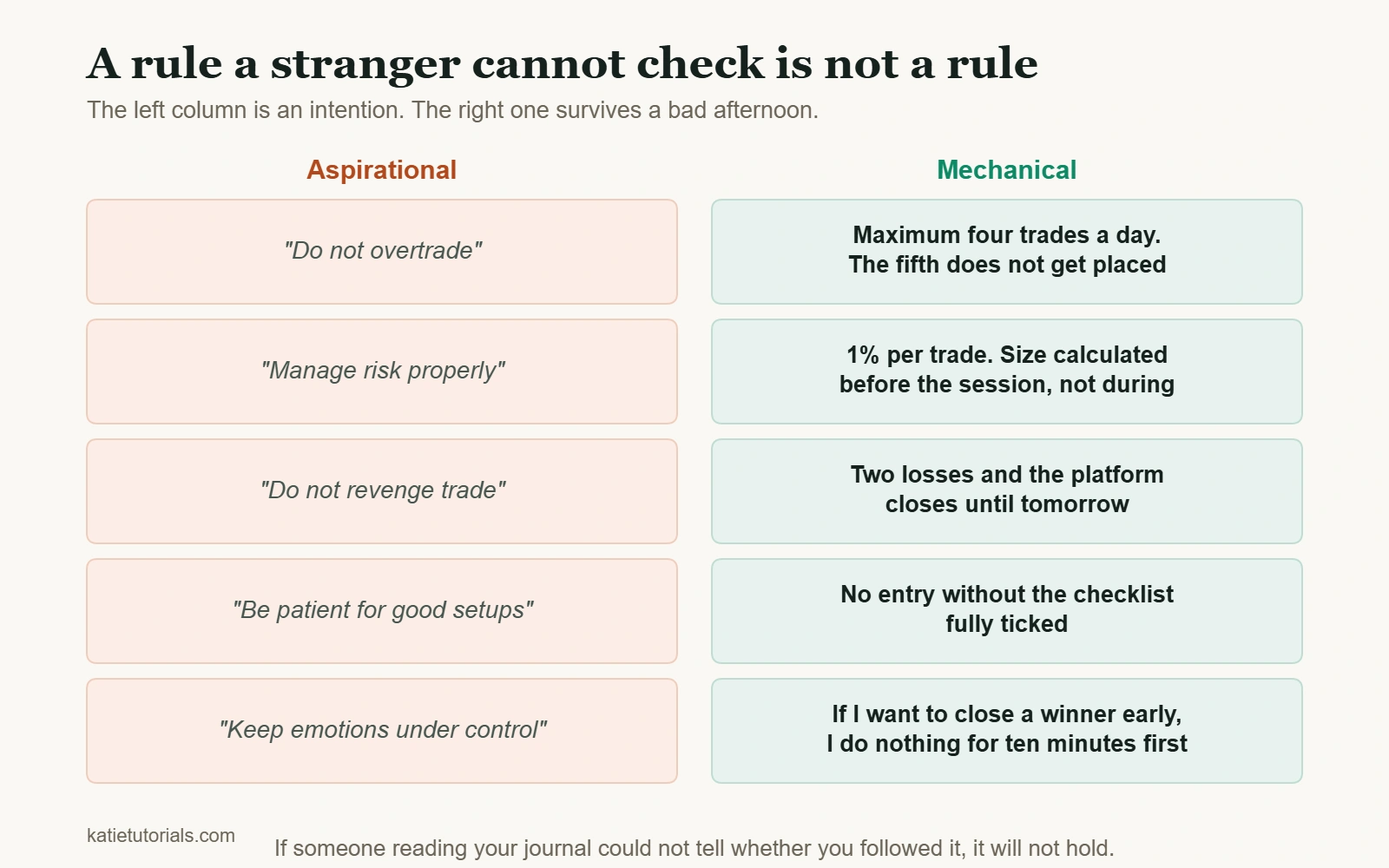
Discipline is an engineering job, not a character test. Mechanical rules, a pre-trade checklist, and what to actually do on the days you break your own system.