Why Do I Keep Losing Money in Trading?
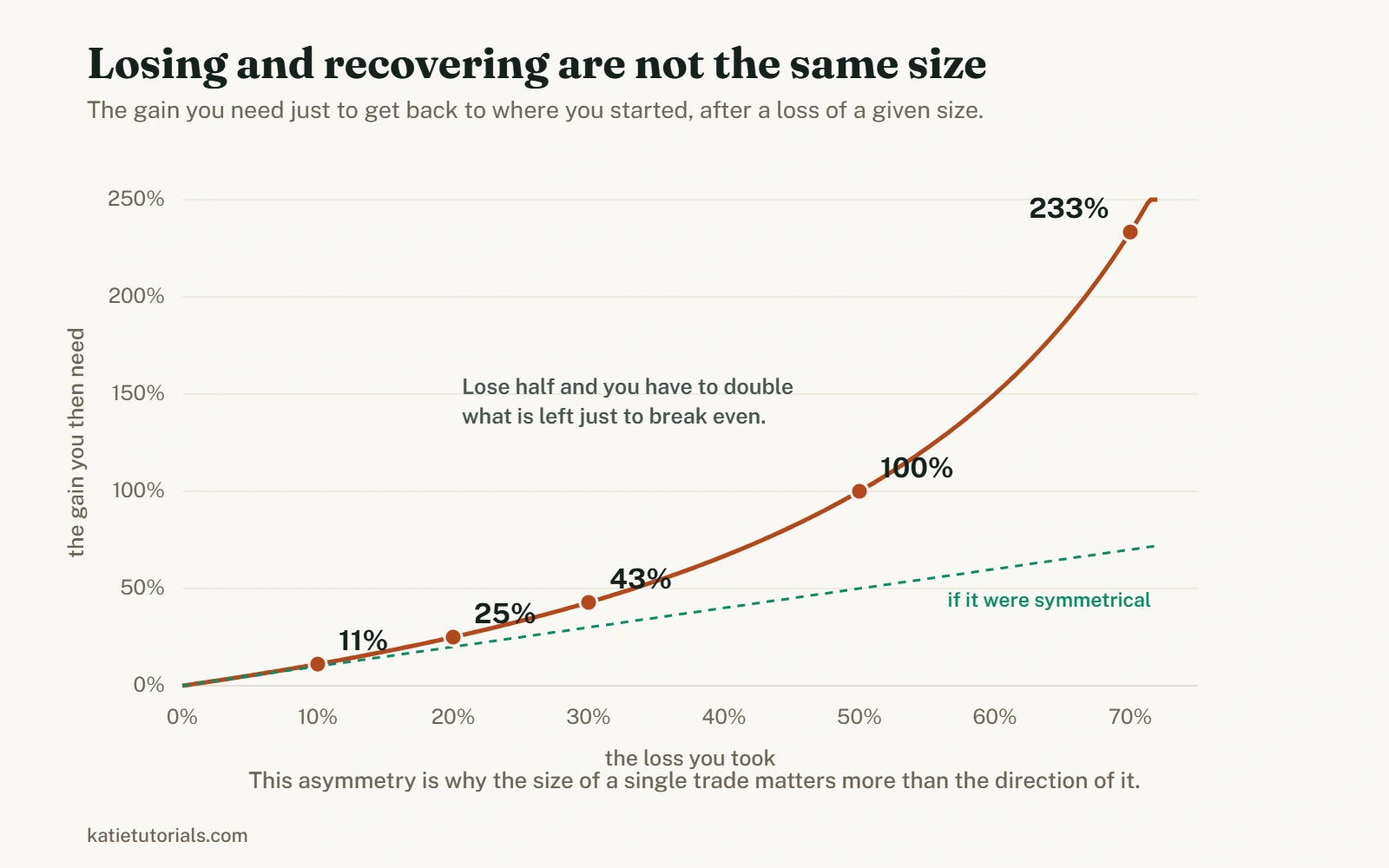
Ten reasons accounts lose money, from position size and revenge trading to the ones decided before you ever place a trade. With the numbers behind each one.
Ten reasons accounts lose money, from position size and revenge trading to the ones decided before you ever place a trade. With the numbers behind each one.
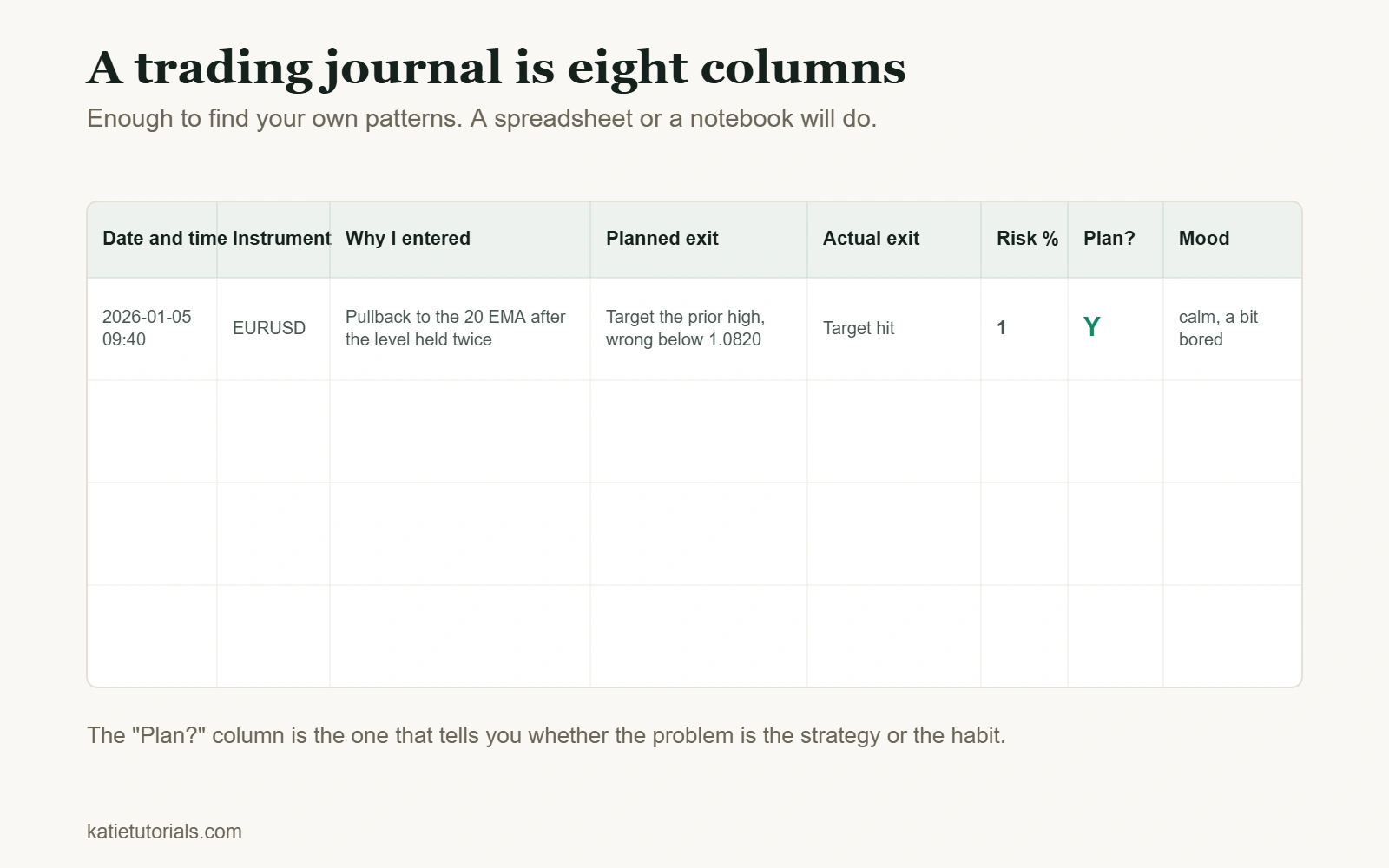
Eight columns, a free template and no software required. What to record, how to review it, and the one column that tells you whether the problem is your strategy or your discipline.
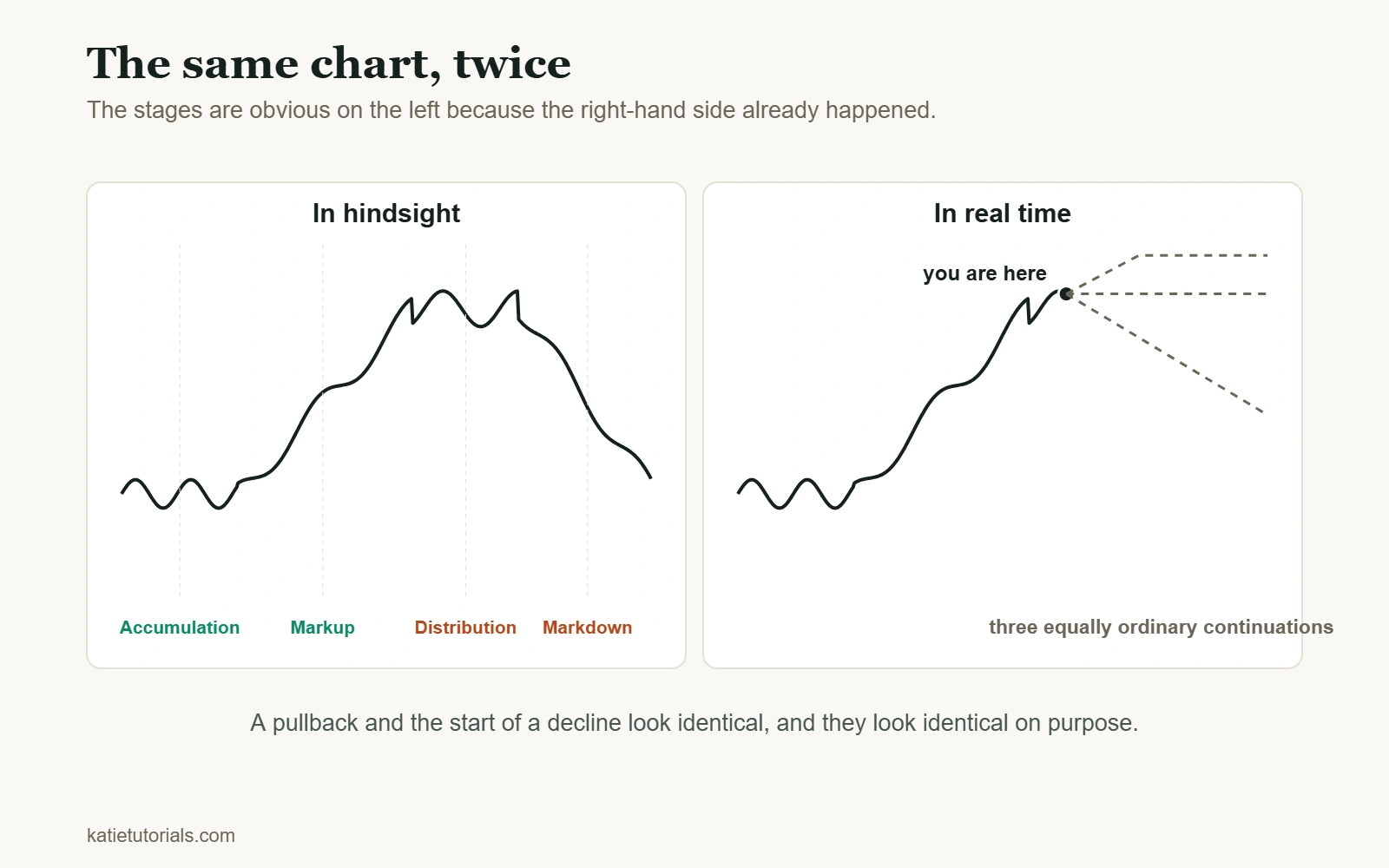
The four stages are a good description of the past and a poor forecast of the future. What you can observe in real time, and how to pick a strategy that suits it.
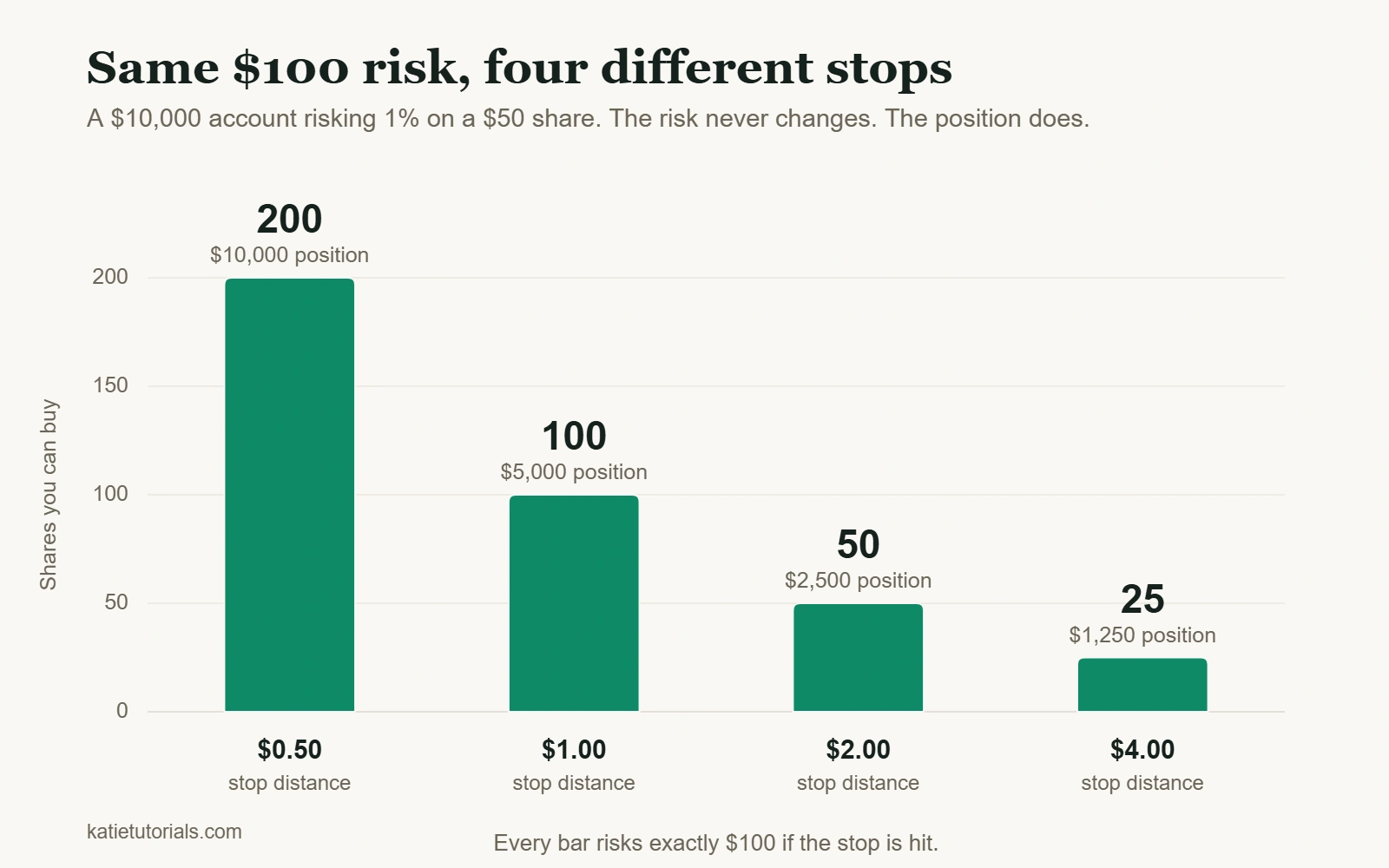
Risk management is two decisions and one division. How much to risk per trade, where the stop belongs, and the arithmetic that turns both into a position size.
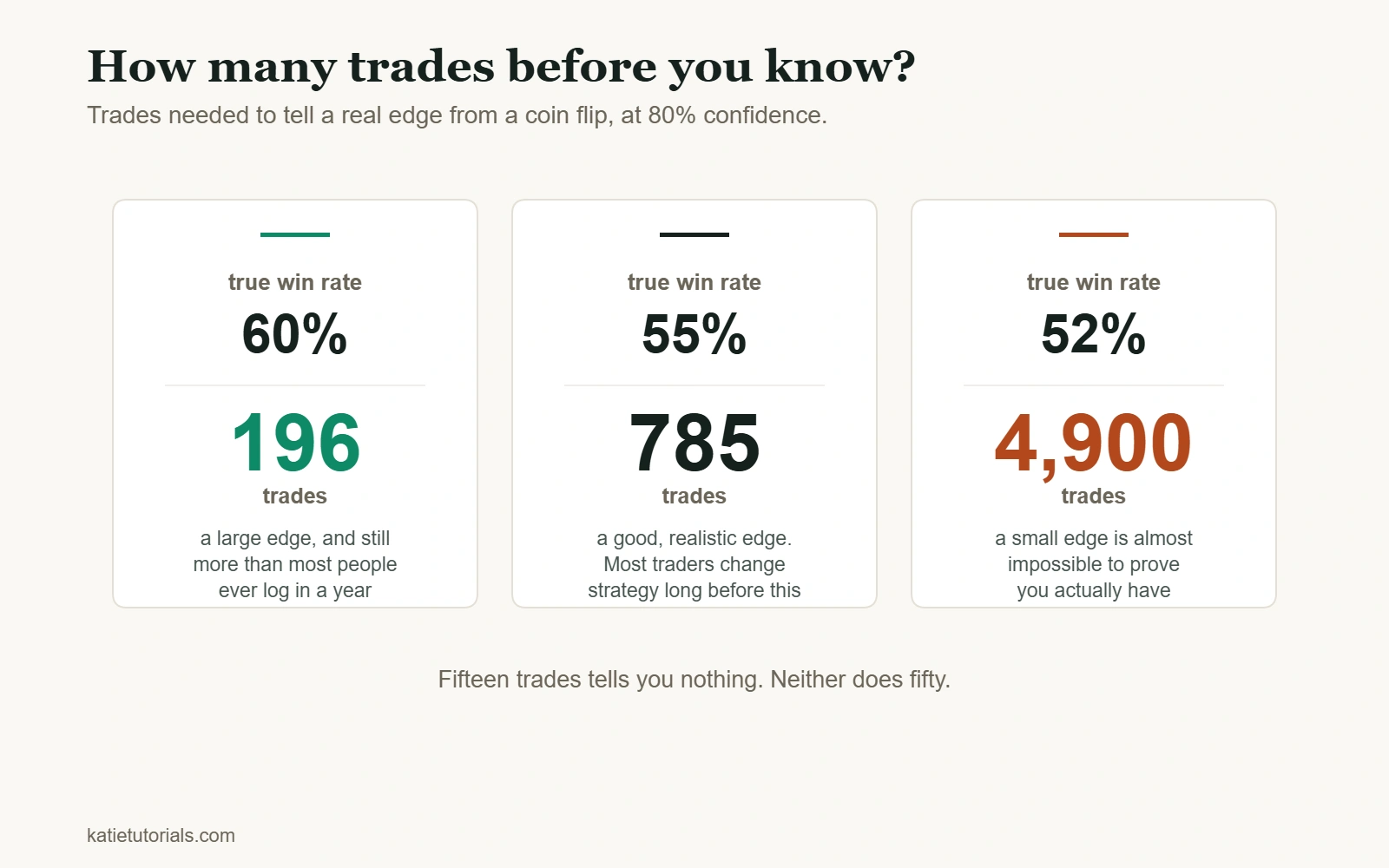
Not because the ideas are complicated. Because the feedback lies, the sample needed to trust it is enormous, and ordinary randomness looks exactly like failure.
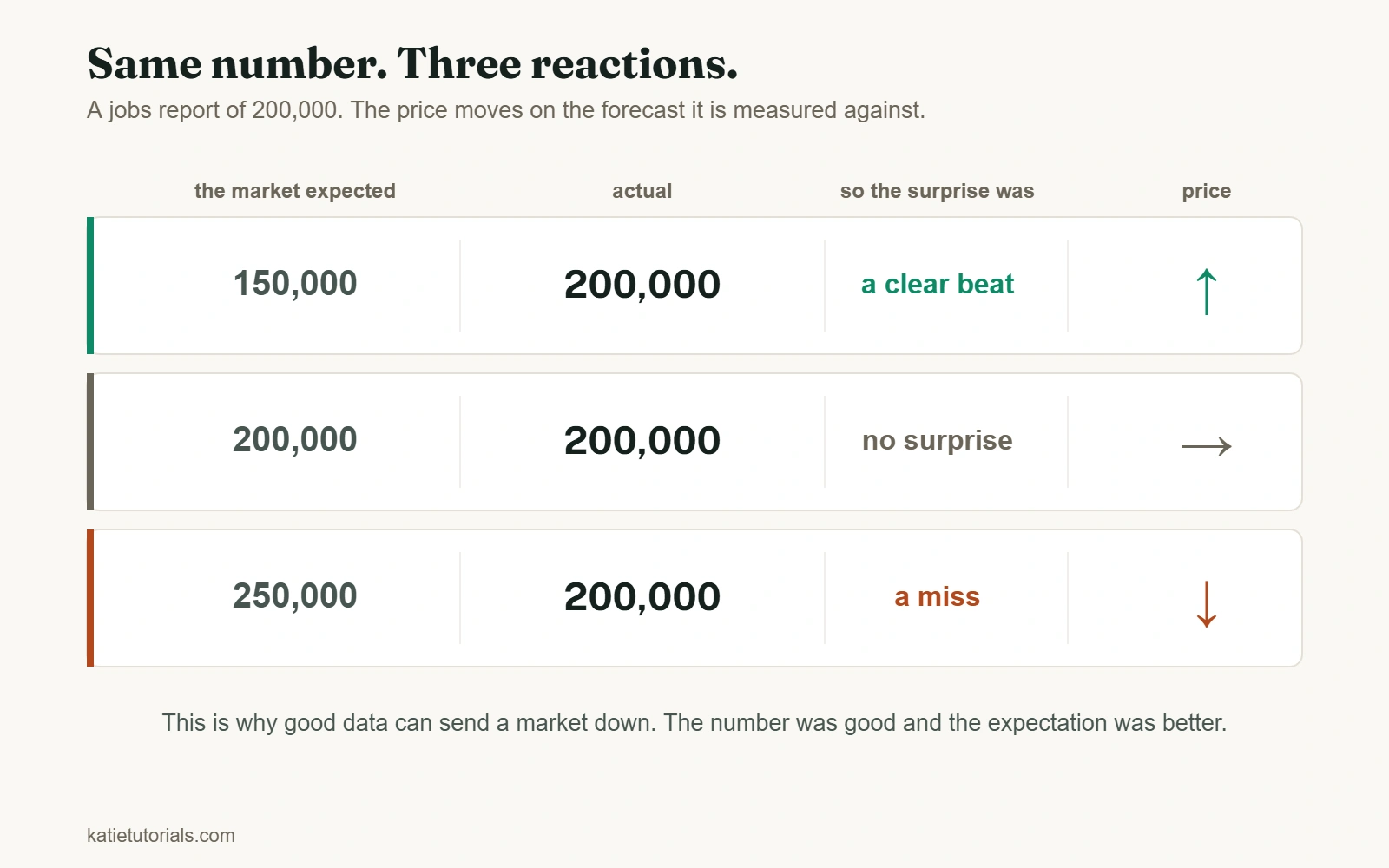
The list is short. The useful part is that markets move on the surprise against the forecast, not on the number, which is why the calendar is a risk tool and not a signal.
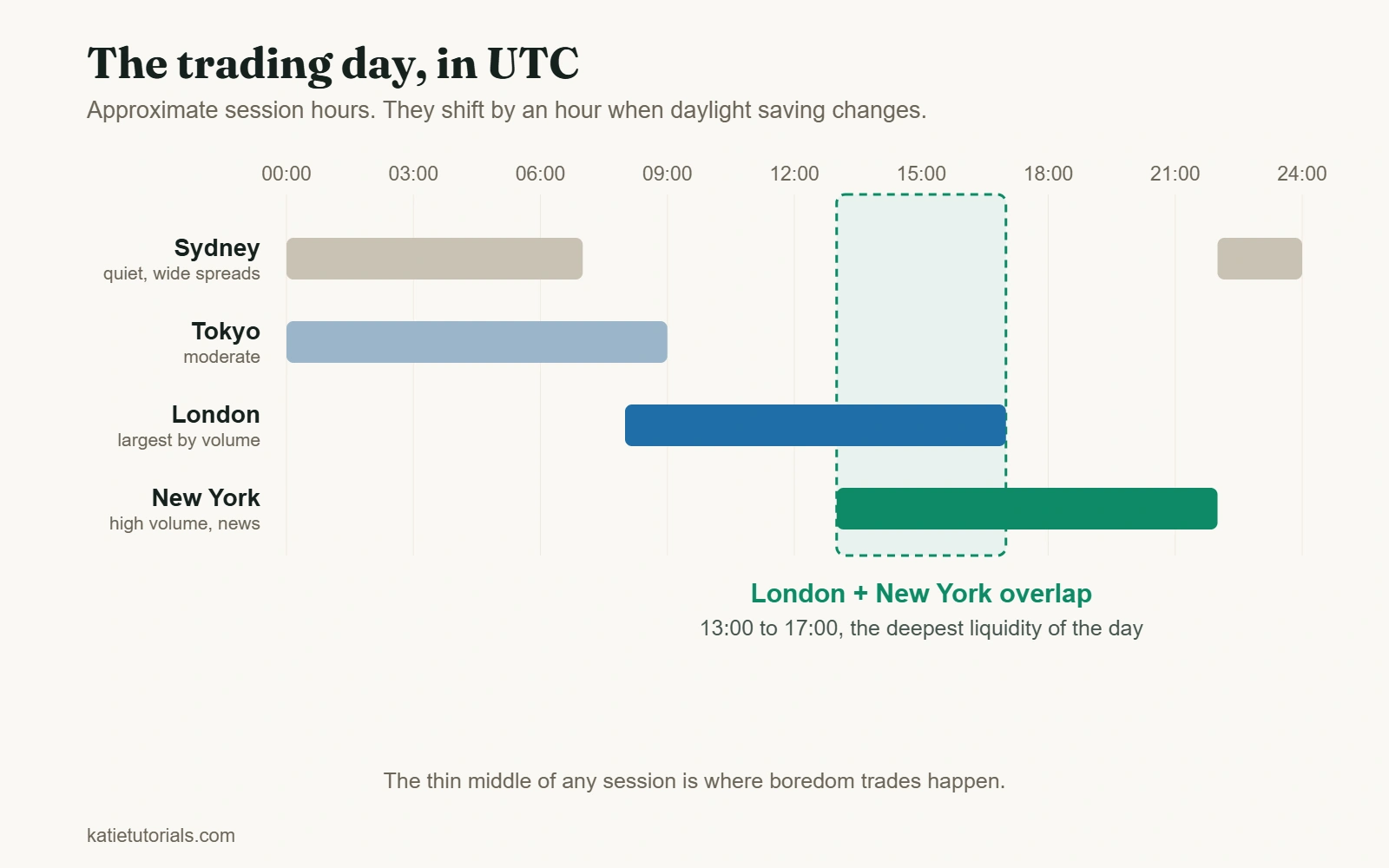
The sessions, the overlaps and the hours to avoid, plus the part nobody covers: how to find the hours you personally trade well from your own record.
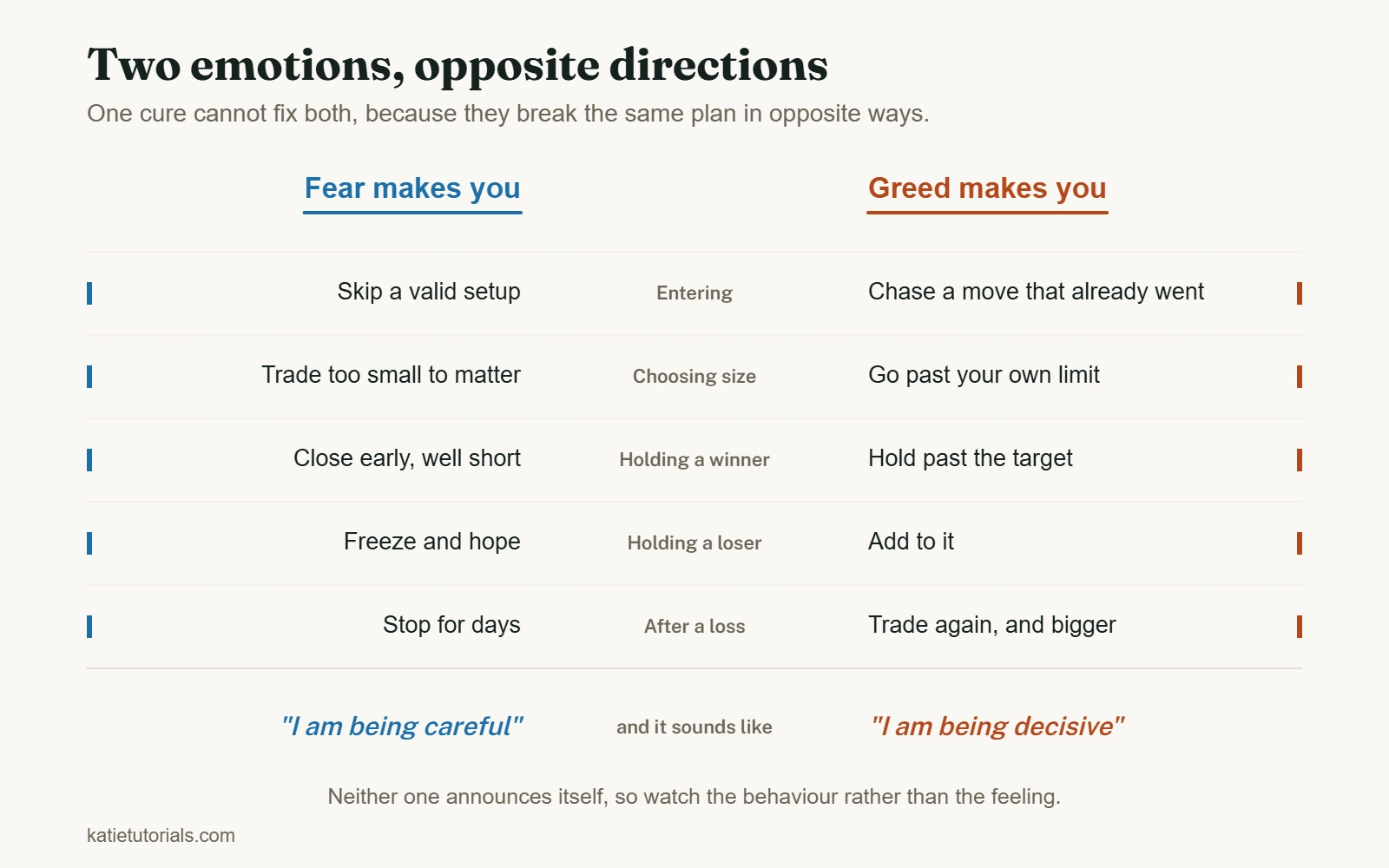
Fear and greed break a trading plan in opposite directions and need opposite fixes. How to tell which one you are in from behaviour rather than feeling.
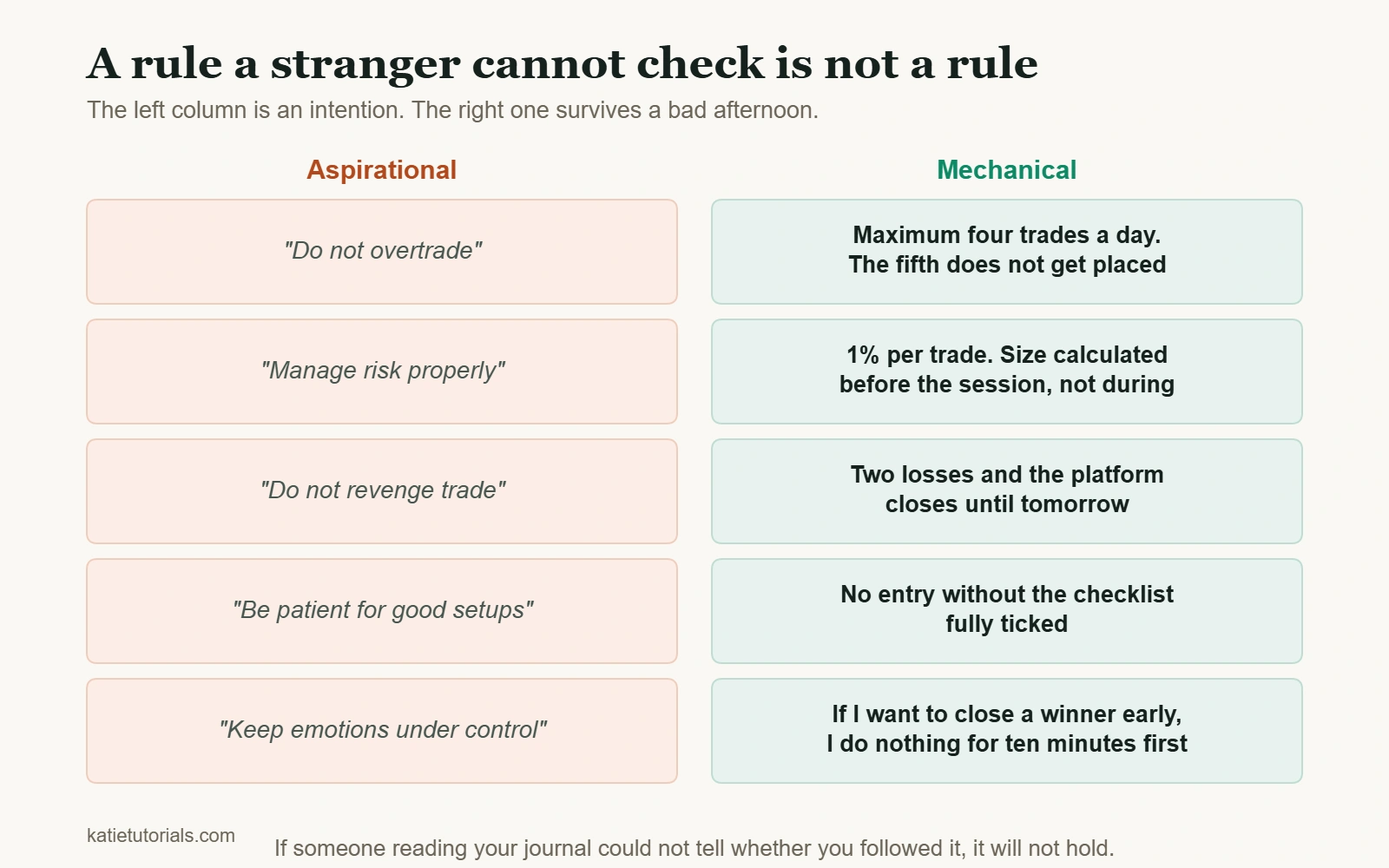
Discipline is an engineering job, not a character test. Mechanical rules, a pre-trade checklist, and what to actually do on the days you break your own system.
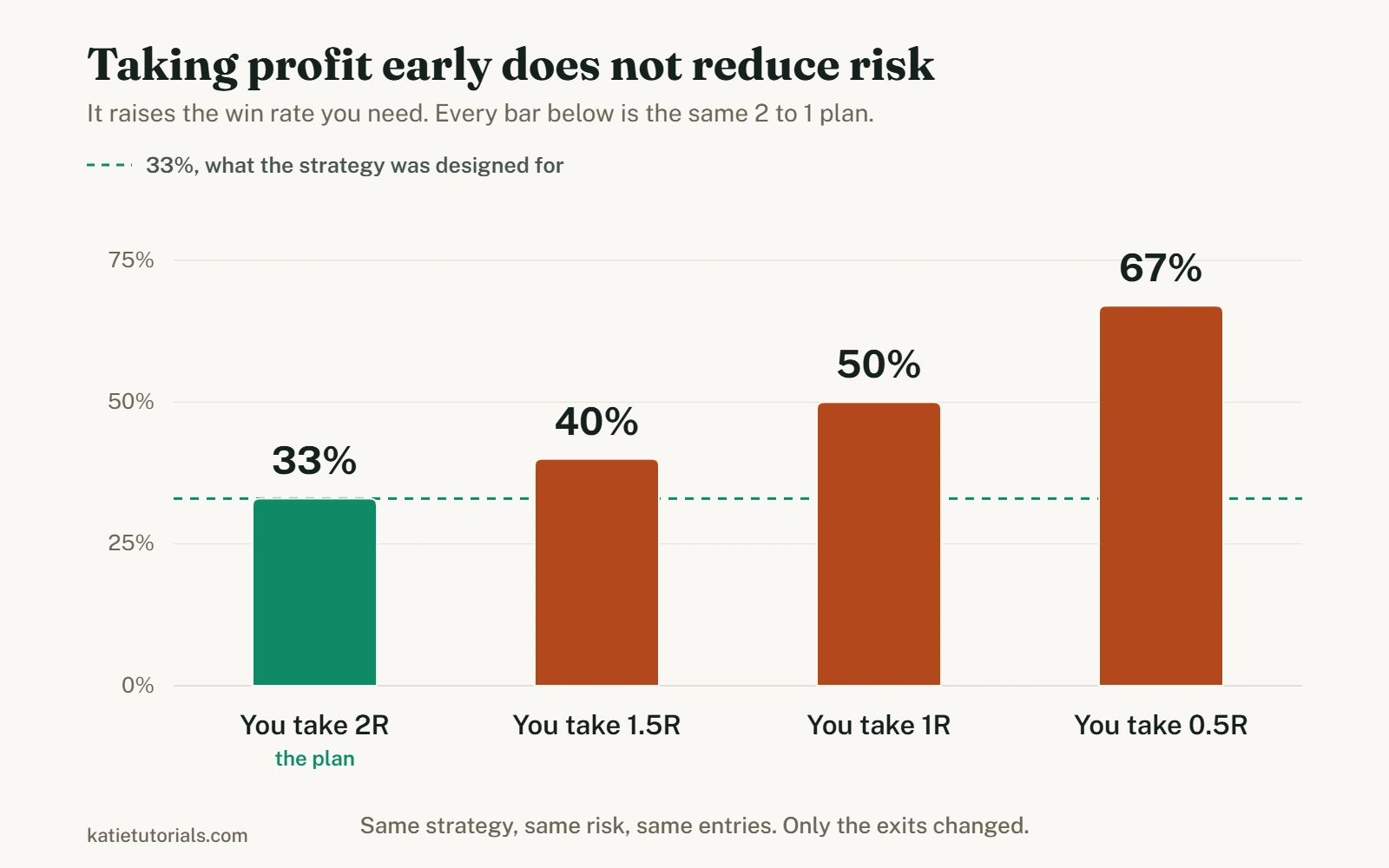
Three exits, all written before you enter. Why cutting winners early raises the win rate you need, and how to tell from your own records whether exits are the problem.